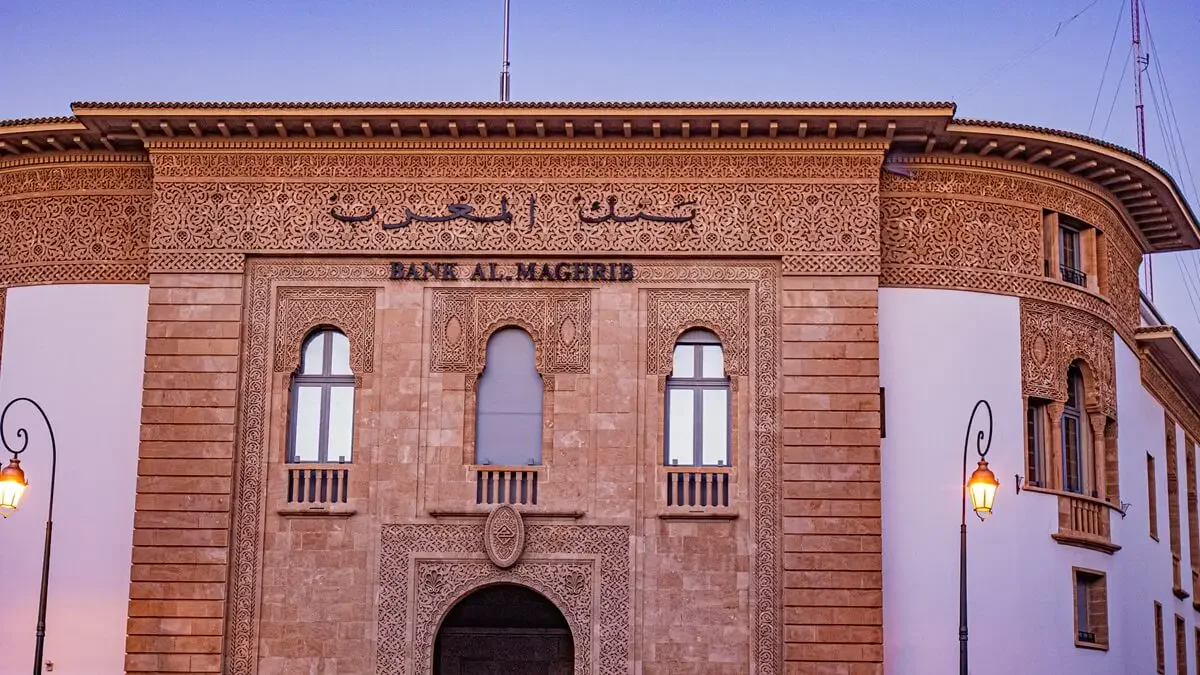
During this session, the Council praised the commitment of various stakeholders who signed the Charter for financing and supporting very small enterprises (TPE) on December 4. It believes this initiative will significantly contribute to the development of this category of businesses, enhancing their participation in investment, job creation, and promoting integrated territorial development.
The Council then reviewed the evolution of the economic situation and the medium-term macroeconomic projections from Bank Al-Maghrib. It noted a slight easing of international trade tensions and the end of the U.S. budget impasse, although uncertainty remains high, particularly regarding U.S. tariff policies and ongoing geopolitical tensions. Despite a relative resilience in the first half of the year, driven by anticipatory effects of tariff increases, the global economy is expected to continue slowing, with improvements projected only in 2027.
Inflation is also expected to decelerate before accelerating again in 2027, with heterogeneous developments across different economies. Nationally, the Council highlighted the remarkable performance of non-agricultural activities and signs of recovery in the labor market. This positive trend is expected to continue in the medium term, supported by investment efforts.
The Council reviewed the 2026 Finance Law and the 2026-2028 Budget Programming, which indicate a continuation of budgetary consolidation and a gradual easing of Treasury debt. Inflation remains low, averaging 0.8% over the first ten months of 2025, primarily due to improved supply of certain food products, particularly olive oil, and lower fuel and lubricant prices. According to Bank Al-Maghrib's projections, inflation is expected to gradually accelerate, aligning with price stability objectives, with forecasts of 0.8% for this year, 1.3% in 2026, and 1.9% in 2027.
The underlying inflation component is projected at 0.7% this year and next, before rising to 1.9% in 2027. Inflation expectations remain well anchored, with financial sector experts surveyed in Bank Al-Maghrib's quarterly report anticipating an average rate of 2% over the next eight quarters and 2.2% over the next twelve quarters.
Regarding the transmission of previous Council decisions, the decline in lending rates for the non-financial sector remains partial, with a cumulative decrease of 58 basis points since the start of monetary easing in June 2024, compared to a 75 basis point drop in the key rate. Considering all these factors, the Council deemed the current key rate of 2.25% appropriate and decided to keep it unchanged.
Given the high level of uncertainty related to ongoing geopolitical tensions and domestic climate conditions, the Council will continue to closely monitor economic developments and base its decisions on the most up-to-date data.
On international commodity markets, oil prices are expected to continue their downward trend due to significant supply from OPEC+ countries alongside persistently weak global demand. The price of Brent crude is projected to drop by 14.3% this year to an average of $68.4 per barrel, then to $63.1 in 2026, before a slight increase to $65.8 in 2027.
The price of Moroccan crude phosphate is expected to gradually decrease from $214 per ton in 2024 to $182 in 2027. Its derivatives, after a strong increase in 2025, are expected to contract in the medium term due to rising international production capacities and anticipated easing of China's export restrictions. Prices are projected to fall from an average of $712 per ton this year to $641 in 2027 for DAP, and from $521 to $487 for TSP.
Conversely, after a decline in 2024, food prices are expected to rise, with the FAO index projected to increase by 4.8% in 2025, 0.7% in 2026, and 2% in 2027.
Global economic growth is expected to continue slowing, decreasing from 3.2% in 2024 to 3.1% this year, and further to 2.7% in 2026, before improving to 3% in 2027. In major advanced economies, growth trajectories will diverge. In the U.S., growth is projected to slow from 2.8% in 2024 to 1.9% in 2025 and 1.8% in 2026 and 2027, impacted particularly by uncertainties stemming from tariff policies.
In the Eurozone, growth is expected to improve from 0.8% in 2024 to a range of 1.2% to 1.5% between 2025 and 2027, supported by private consumption and a recovery in investment. In major emerging economies, growth in China is expected to be moderate but steady, at nearly 5% in 2025 and around 4.5% in the following two years.
In India, growth is projected to remain robust at 7.3% this year but slow to 6.1% in 2026 due to rising U.S. tariffs, before recovering to 6.7% in 2027. In this context, global inflation is expected to continue its decline, falling from 3.7% in 2024 to 2.9% in 2025 and 2026, before rising to 3.1% in 2027.
In major advanced economies, inflation is expected to remain close to the ECB's target in the Eurozone, while in the U.S., it is projected to persist above the Fed's target, influenced by tariff increases, reaching 2.8% in 2025, 3.1% in 2026, and 2.7% in 2027.
Regarding monetary policy directions in major advanced economies, after eight rate cuts since June 2024, the ECB decided to keep its rates unchanged for the third consecutive time during its meeting on October 30. In contrast, the Fed, observing rising unemployment and increasing downside risks to employment prospects, reduced the federal funds target rate by 25 basis points to a range of 3.50%-3.75% during its meeting on December 9 and 10, marking the third consecutive cut this year.
The Bank of England also decided to maintain its rate unchanged at 4% on November 5, after three cuts in the first ten months of 2025. Nationally, economic growth is projected by Bank Al-Maghrib to accelerate notably to 5% this year and consolidate at an average of 4.5% over the next two years.
Following a 5% increase in 2025, agricultural value added is expected to rise by 4% in 2026 and 2% in 2027, assuming a return to average cereal harvests of 50 million quintals. For non-agricultural activities, growth is expected to remain strong, particularly due to robust investment dynamics, reaching 5% this year, 4.8% in 2026, and 4.5% in 2027.
In terms of external trade, exports are projected to increase by 4.5% in 2025, driven by improved phosphate and derivative sales amounting to 108 billion dirhams, followed by increases of 8.4% in 2026 and 7.9% in 2027, particularly linked to the anticipated recovery in automotive industry shipments.
These shipments, after a contraction this year, are expected to grow annually by around 17%, reaching 208 billion dirhams in 2027. Meanwhile, the pace of imports is expected to remain strong, primarily driven by acquisitions of capital and consumer goods, while the energy bill is expected to decrease further in 2025 and 2026, before rising to 101 billion dirhams in 2027.
Travel receipts are expected to maintain their strong performance, reaching nearly 155 billion dirhams in 2027. Transfers from Moroccans living abroad are projected to increase by an average of 3.1% annually between 2025 and 2027, reaching 130 billion dirhams.
Overall, the current account deficit is expected to remain contained at 1.8% of GDP in 2025 and below 2% in the following two years. Foreign direct investment flows are also expected to strengthen, with annual receipts equivalent to 3.5% of GDP.
Considering the planned external financing from the Treasury, Bank Al-Maghrib's official reserve assets are expected to gradually strengthen, reaching 448 billion dirhams by the end of 2027, ensuring coverage of nearly five and a half months of imports of goods and services.
Regarding monetary conditions, the banking liquidity requirement is expected to gradually widen to 158 billion dirhams in 2027, particularly linked to the anticipated increase in currency circulation. For bank credit to the non-financial sector, considering the expected evolution of economic activity and banking system expectations, its growth rate is projected to accelerate to 4.1% in 2025 and 5% in 2026 and 2027.
As for the value of the dirham, quarterly assessments conducted by Bank Al-Maghrib, based on the latest version of the methodology used internationally, indicate that it remains generally aligned with economic fundamentals. The effective exchange rate is expected to appreciate by 2.2% in real terms in 2025, resulting from a nominal value increase, tempered by a lower domestic inflation rate compared to partner and competitor countries.
It is projected to depreciate by 2.8% in 2026 and 0.5% in 2027. In terms of public finances, considering the budget execution as of the end of October, the 2026 Finance Law data, and the 2026-2028 Budget Programming, Bank Al-Maghrib's projections indicate a continuation of medium-term budgetary consolidation.
The deficit excluding state asset sales is expected to decrease from 3.9% of GDP in 2024 to 3.6% in 2025, and further to 3.4% in 2026 and 2027. Finally, the Council approved the foreign exchange reserve management strategy and the Bank's budget, as well as the internal audit program for the 2026 fiscal year. It also set the dates for its regular meetings for the same year on March 17, June 23, September 22, and December 15.