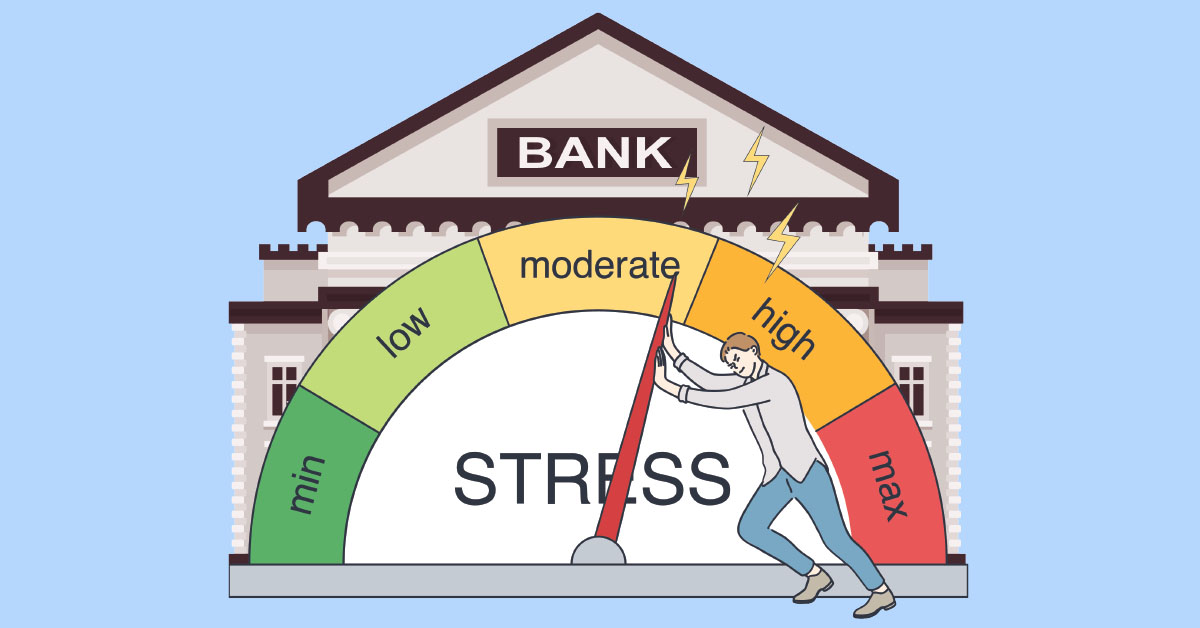
The apparent stability of financial institutions does not guarantee long-term resilience. As economic, climatic, and geopolitical uncertainties accumulate, regulatory authorities require more dynamic indicators than just prudential ratios. This need has led to the introduction of bank stress tests in supervisory frameworks, both in Morocco and globally. Their primary goal is to simulate the impact of significant shocks on the financial solidity of banks and to anticipate necessary measures should these scenarios materialize.
Bank stress tests are simulation exercises that project bank balance sheets in deteriorating environments to evaluate the effects of economic or financial stress, such as rising credit defaults, liquidity tensions, market downturns, and currency depreciation. Bank Al-Maghrib has structured its approach around several categories of tests, each targeting a specific type of risk:
1. **Sensitivity Stress Tests**: Measure the impact of isolated variations (interest rates, exchange rates, market risk, liquidity) on banks' solvency.
2. **Interbank Contagion Stress Tests**: Simulate the propagation of defaults between institutions through cross-commitments in interbank markets.
3. **Cross-Border Stress Tests**: Analyze transmission risks between Moroccan banks and their subsidiaries in Africa.
4. **Bank and Insurance Stress Tests**: Evaluate direct interconnections between the two sectors, particularly through cross-exposures.
5. **Macroeconomic Stress Tests**: Examine the banking system's reaction to broader shocks arising from the national or international economic environment.
These tests enable regulators to identify potential weaknesses and, if necessary, recommend adjustments such as strengthening capital, limiting exposures to certain sectors, or revising risk policies.
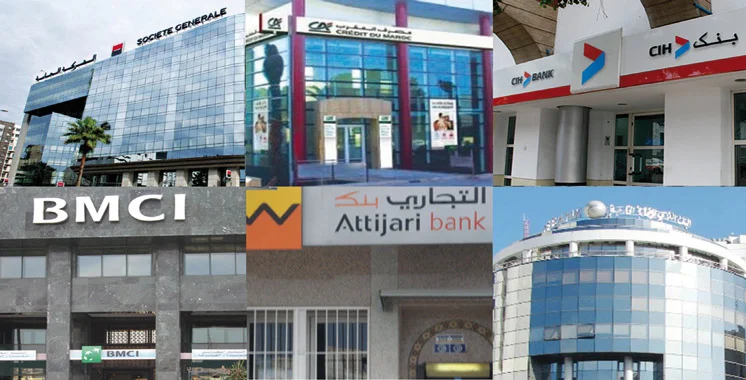
The most recent stress testing exercise, based on data from the end of 2024, involved the eight largest banks in the country. Three macroeconomic scenarios were considered:
- A central scenario aligned with official forecasts, projecting a growth rate of 4.5% for 2025-2026.
- A severe scenario incorporating geopolitical tensions, a deteriorating global climate, and trade disruptions.
- An extreme scenario combining global recession, soaring commodity prices, and national climate degradation.
In the central scenario, indicators showed improvement: a decrease in non-performing loans, an increase in net income, and comfortable solvency ratios. In the severe scenario, banks experienced eroding profitability and declining prudential indicators, although they did not breach regulatory thresholds. In the extreme scenario, losses accumulated, with non-performing loans reaching 12.7% by 2026, and capital ratios significantly decreased. However, the tested institutions maintained an adequate foundation to remain within regulatory limits.
Thus, the stress test provides the central bank with an advanced monitoring tool and allows banking institutions to assess the robustness of their models. The analysis of results does not offer a definitive picture of the sector's health but guides supervisory decisions and strategic management.
Ultimately, Bank Al-Maghrib's structured, multi-source approach, grounded in the regional environment, aligns with international standards. It enhances the system's capacity to absorb shocks while also reminding that financial stability does not solely rely on credit growth or short-term profitability; it is built over time with regularly tested safety margins.
Also read our latest dossier on banking risks:
- Credit Risks: The Foundation of Banking Regulation
- Operational Risks and Business Continuity: BAM Imposes Vigilance on Banks
- Market Risks: Strengthened Framework to Limit Exposures
- Interest Rate Risks: BAM Faces Economic Variations
- Bank Stress Tests: The Resilience of Institutions Under Crisis
- Banking Cybersecurity: BAM Confronts Cyber Threats
- Climate and Finance: BAM Adapts the Sector to New Environmental Challenges