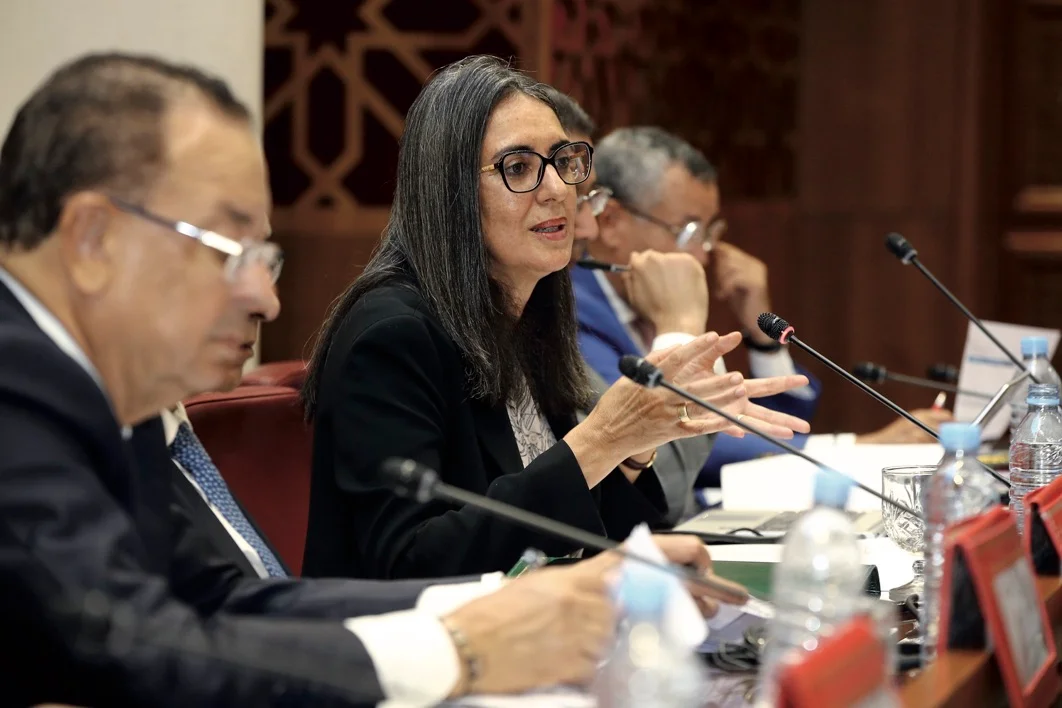
The PLF-2026 orientation note establishes four major objectives: consolidating economic emergence, balancing growth with social justice, strengthening the social state, and preserving public finance equilibrium. It emphasizes reducing social and spatial disparities, expanding social coverage, boosting productive investment, and managing debt. The executive branch aims to maintain growth at around 4.5% in 2026, with a budget deficit reduced to 3% of GDP and debt stabilized at 65.8%. These priorities are not new but extend ongoing initiatives from recent years, such as the generalization of direct aid, expansion of medical coverage, and territorial programs, with the ambition of aligning them with a path of budgetary discipline.
However, employment remains a critical Achilles' heel. After three quarters of dynamic job creation in the non-agricultural sector, the second quarter of 2025 saw a halt, with only 5,000 net jobs created compared to over 280,000 in the first quarter. Abdellatif Jouahri, governor of Bank Al-Maghrib, raised alarms about this slowdown, warning that it threatens domestic consumption, the main driver of growth. This alert resonates with the youth's demands, which focus on daily life, employment, access to healthcare, and education. In other words, macroeconomic fundamentals—growth, controlled inflation, and dynamic export revenues—risk being undermined if employment does not keep pace. The link between employment and consumption is crucial for the social sustainability of growth.
Moreover, multidimensional poverty statistics highlight the scale of the challenges. While the poverty rate decreased from 11.9% in 2014 to 6.8% in 2024, over 2.5 million Moroccans remain affected, with 72% living in rural areas, according to the HCP. Regional disparities are still pronounced. In regions like Béni Mellal-Khénifra or Fès-Meknès, multidimensional poverty hovers around 10%, two to three times the urban average.
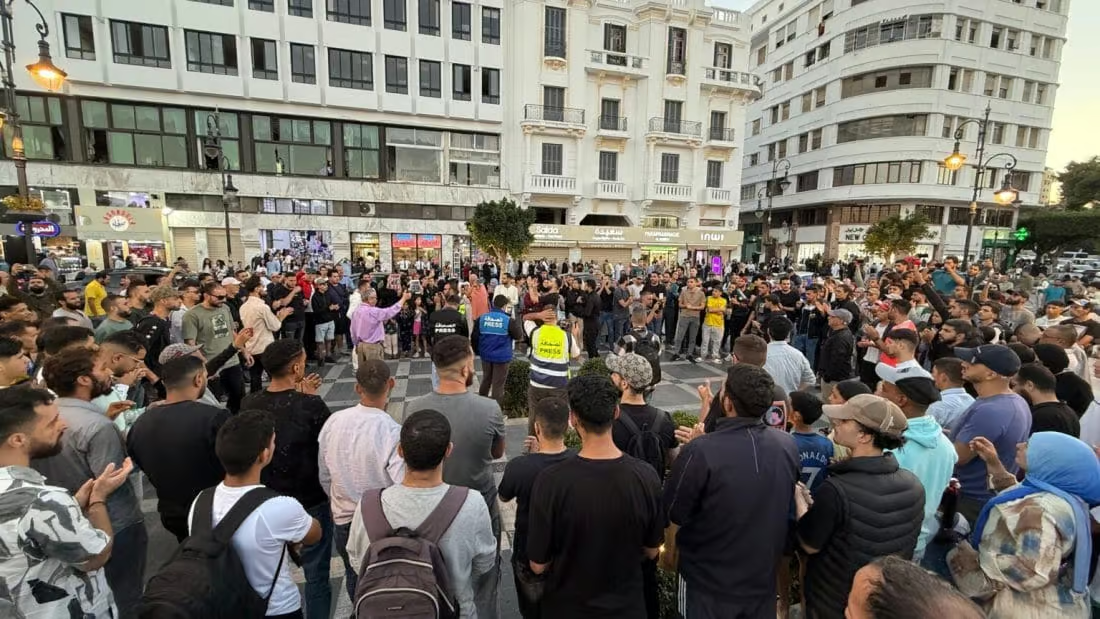
The PLF-2026 orientation note reflects some initiatives that align with Generation Z's demands. Central to this is spatial justice, presented as a structuring axis of the 2026 budget: reducing territorial disparities, valuing local specificities, consolidating advanced regionalization, and promoting solidarity among territorial entities. This directly translates royal high directives and aligns with youth observations that social and regional fractures remain acute.
In the education-training-employment sector, the note highlights a series of initiatives aimed at ensuring equal opportunities. The "Pioneering Schools" program, expanded to 1.3 million students, initiates a reform of the educational model, while the "Second Chance Schools," with a goal of 400 centers by 2030, aim to combat school dropout rates. The Employment Roadmap seeks to reduce unemployment to 9% by 2030, relying on eight structural initiatives focused on skill development and professional integration. These measures reflect a political will to align public action with social and territorial justice, addressing several demands from the Gen Z manifesto: education, employment, and equity.
However, two gaps remain. The first is temporal; youth demand immediate responses, while the PLF-2026 sets horizons for 2026 or 2030. The second gap concerns implementation, as programs are announced as strategic intentions but lack clarity on budgets, timelines, and accountability mechanisms. Execution and transparency are at the heart of youth skepticism. Thus, while there is thematic convergence, discrepancies persist regarding urgency and the state's ability to swiftly fulfill its commitments.
Morocco faces a delicate equation: maintaining a trajectory of macroeconomic discipline while addressing immediate and pressing social demands. Growth figures (5.5% in Q3, according to the HCP) may seem abstract to youth facing unemployment, overcrowded hospitals, and educational inequalities. The issue is not merely about "changing" priorities but about re-embodying them: prioritizing public health through not only social coverage but also an emergency hospital plan; translating educational trajectories (pioneering schools, second chance) into visible recruitment and resources in classrooms; giving substance to "spatial justice" by targeting specific territories with clear timelines; and integrating accountability and anti-corruption efforts as an explicit fifth priority.
Finally, it is important to note that the PLF-2026 orientation note is merely a framing document. The government has several weeks to develop the final version of its finance bill before it goes to Parliament. Therefore, nothing prevents the executive from revisiting its priorities or at least clarifying certain measures to address rising demands. The PLF-2026, as currently framed, remains coherent and robust from a macroeconomic perspective. However, the public is not asking for a trajectory of financial sustainability but demanding tangible proof of a vibrant social state. The risk, without adjustment, is a widening gap between technocratic rationality and social urgency.