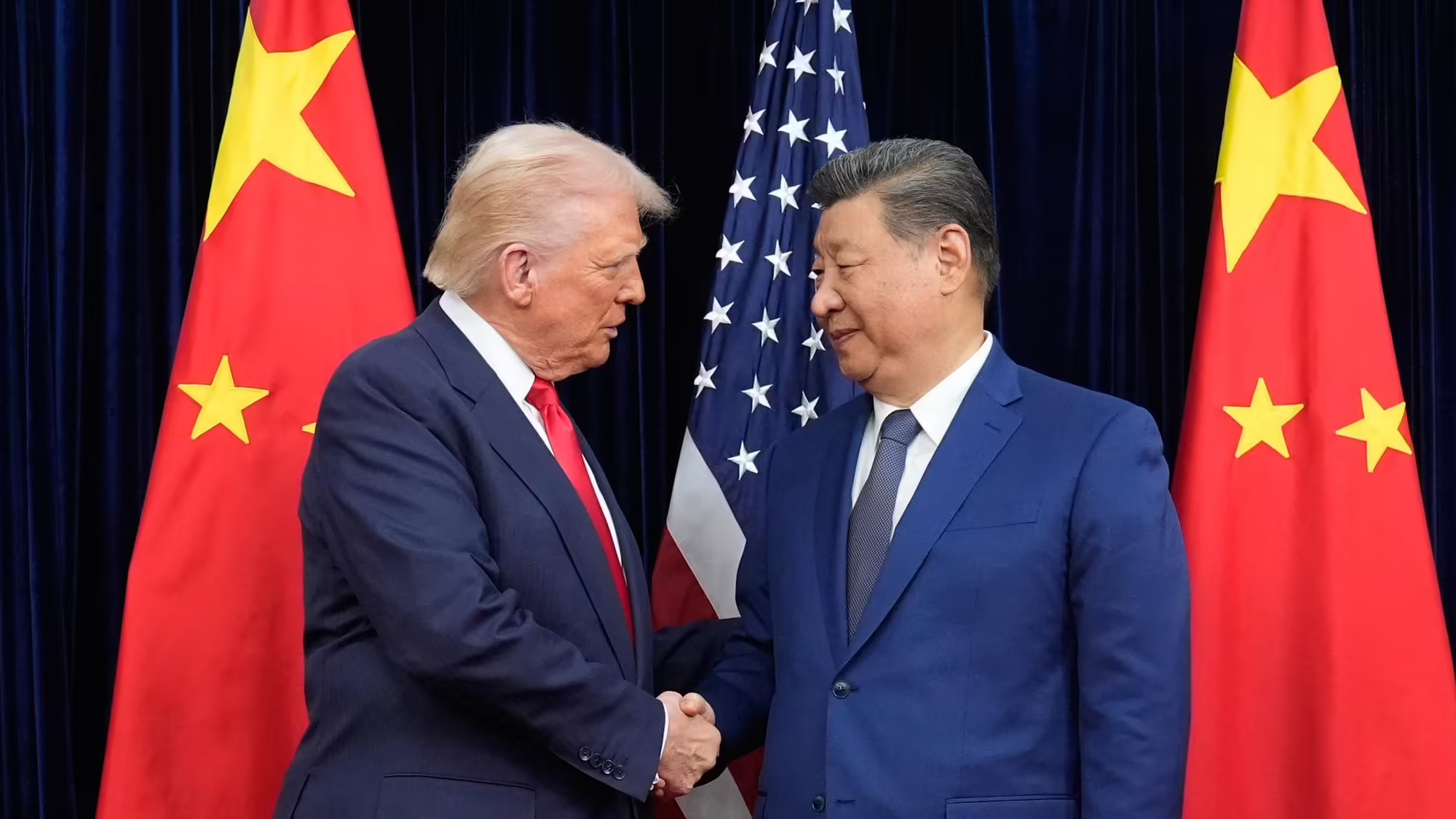
The meeting, the first face-to-face encounter since 2019 and since Trump's return to the White House in January, took place during the 32nd APEC Economic Leaders' Summit in Gyeongju. Trump described the meeting as a "great success" and announced plans to visit China in April 2026.
During the discussions, Trump revealed that tariffs on Chinese products had been reduced from 57% to 47%. An agreement was reached to revive American soybean purchases by Beijing and to maintain the export of rare earth elements. Trump emphasized that both countries would collaborate to curb illicit fentanyl trade, noting that the two leaders "agreed on almost everything," although some topics were not addressed.
On technological issues, Trump mentioned the sale of Nvidia chips to China, but no major agreement was reached, as the chips in question were not the most advanced artificial intelligence models.
Chinese President Xi Jinping called for ensuring "the smooth operation of the gigantic ship of China-U.S. relations." He reminded that since Trump's reelection, the two leaders had maintained contact, and their relationship had generally been stable. Xi highlighted that despite normal differences between the two major economies, Beijing and Washington could work together to achieve "great concrete things" for both nations and the world.
He added that China's development aligns with Trump's vision of "making America great again," suggesting that the two countries could help each other prosper. "You and I are at the helm of Sino-American relations. In the face of winds, waves, and challenges, we must stay the course and ensure the stability of these relations," Xi stated, calling for a "solid foundation and a favorable climate for the development of both countries."
Previous agreements on tariffs and rare earth exports, which had reduced retaliatory tariffs to about 55% for the U.S. and 10% for China, are set to expire on November 10. Beijing is demanding the removal of the 20% tariffs on fentanyl-related products and the easing of U.S. controls on sensitive technology exports.
The Busan meeting occurs amid ongoing economic rivalry between Washington and Beijing, both seeking to stabilize their relations after years of trade and technological tensions. Since the tariff war of 2018, the two powers have alternated between phases of easing and tensions over intellectual property, supply chain security, and market access.


