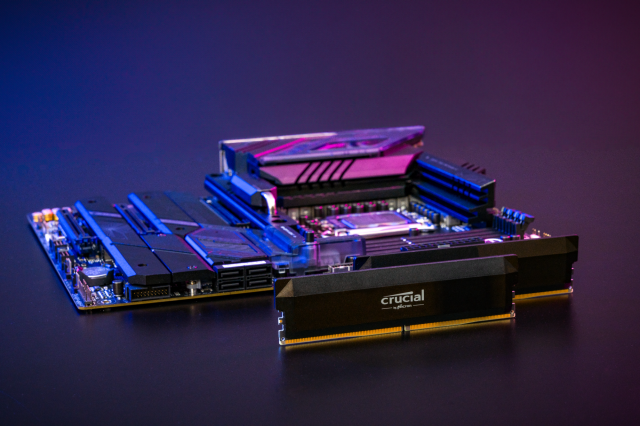
The global market for memory components is currently facing a new phase of tension. This situation is primarily driven by the increasing demand for memory in AI data centers, which has become the focus for the three leading global manufacturers. One of these manufacturers has even decided to fully dedicate its production to this sector, halting the manufacturing of memory for computers.
This reallocation has negatively affected the computer market, particularly for PCs and mobile phones. The other two major manufacturers, already under pressure, are struggling to compensate for the lack of supply. Industry professionals estimate that the available supply in the market has decreased by 25 to 30%. This sharp contraction has created an immediate scarcity effect, resulting in a significant price increase. Prices for memory components have reportedly surged from 900 to 3500 DH within a few days.
Computer assemblers, who heavily rely on these components, are the first to feel the impact. They are directly exposed to the volatility of costs and product availability.
On the distribution side, this situation necessitates a profound reorganization of the market. Younes El Himdy, CEO of Disty, confirms that price pressure is now clearly noticeable. "It's a race for stock," he summarizes, explaining that he has placed advance orders to secure needs until the first half of 2026. This defensive anticipation strategy has become essential to maintain business continuity.
Despite these measures, controlling the surge in prices remains challenging. In this context, only the most capitalized players have sufficient financial flexibility to absorb the shock, build substantial stock, and preserve their market position. Conversely, weaker operators may find themselves under significant pressure.
On the demand side, a slowdown in purchases from individual consumers is not ruled out, influenced by rising prices and consumer trade-offs. However, public sector clients and large companies are expected to continue their investments. Many are engaged in IT infrastructure renewal cycles that are difficult to postpone, according to the CEO of the listed company.
Nevertheless, this situation is not unprecedented. The CEO of Disty Technologies recalls that the market has previously experienced comparable tension, particularly during the Covid period. Experience shows that rigorous and proactive stock management can help navigate these phases without major disruptions, while awaiting a gradual rebalancing of supply and demand. He estimates that this transition period could last from one to two years.