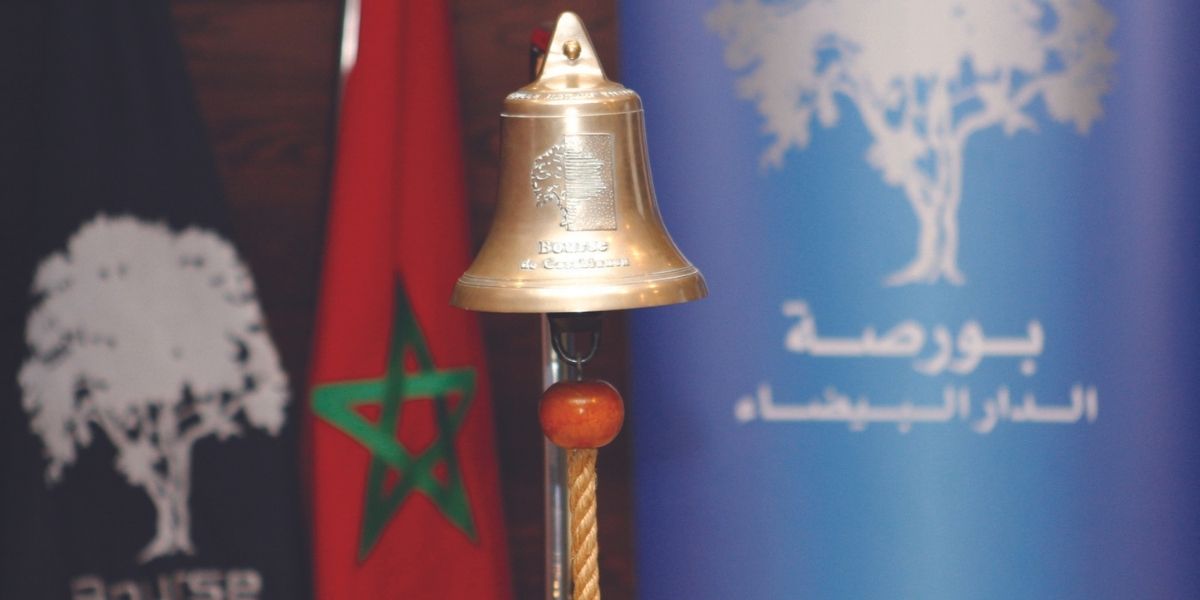
The recent wave of IPOs marks a significant return for the Moroccan stock market, gradually reclaiming its primary role in financing the economy. These introductions are no longer limited to large groups; they now encompass mid-sized companies from diverse sectors, often supported by growth capital investors.
During the presentation conference for Vicenne's IPO, Younes Benjelloun, co-founder and CEO of CFG Bank, placed this dynamic within a broader context. He noted that the resurgence in primary market activity reflects the emergence of an "ecosystem" where companies grow, engage with private equity, and then turn to the stock market to fund their next development phase. "We were at a pace of one IPO per year; I believe we will soon move to three. The ultimate goal would be to achieve one operation per month," he stated, expressing hope for an accelerated virtuous cycle.
According to Benjelloun, a more sustained pace would better represent the diversity of the Moroccan economy, which remains underrepresented in sectors like automotive and textiles. "We have opened new compartments, but there are still significant industries absent from the stock exchange," he reminded attendees. The period from 2010 to 2019 was particularly quiet, with only four IPOs in ten years, a near-total absence of major operations, and stagnant liquidity. The restart observed since 2020 is attributed to both the authorities' desire to revitalize the Casablanca market and the maturity of a new generation of leaders. These leaders now view listing not as an administrative burden but as a structural financing lever and a governance vector.
The figures are telling: Aradei Capital (2020) initiated the trend with a 600 million dirham operation to strengthen its diversified real estate model. TGCC (2021) raised a similar amount to consolidate its regional development in construction. Disty Technologies (2022) became the first company to join the alternative market, demonstrating that the stock exchange can also finance SMEs. Akdital (2022), a private healthcare operator, marked a significant milestone with a raise close to 1.2 billion dirhams. CFG Bank (2023) reintroduced the banking sector into the stock market dynamic. CMGP Group (2024) and Vicenne (2025) confirmed the trend with two highly followed IPOs in agriculture and healthcare, respectively.
A record public participation was observed, with a total subscription amount of 114.4 billion dirhams across the seven operations. The last two introductions, CMGP and Vicenne, revealed an unprecedented phenomenon: a massive influx of individual investors. Vicenne attracted over 37,000 subscribers, a record for the Moroccan market, while CMGP exceeded 33,000. Coverage rates reached rarely seen levels—64x for Vicenne and 37x for CMGP—indicating demand far exceeding the offered supply. These figures reflect a renewed appetite among the general public for stock market assets, fueled by the digitalization of market access and the media coverage of recent operations.
Financial intermediaries confirm a significant increase in the opening of securities accounts since late 2023, particularly among young urban professionals. "IPOs have become moments of collective financial education. They help reconcile Moroccan households with equity investment," explained a brokerage firm director.
This new wave of listings provides an accurate snapshot of Morocco's productive fabric. Companies from construction, healthcare, agriculture, and financial services dominate the movement, reflecting major projects of the decade: urbanization, food sovereignty, and human capital development. This diversification contrasts with previous years when the Moroccan stock exchange was concentrated in banking, real estate, and telecommunications. The Casablanca Stock Exchange now attracts growth companies aligned with the country's economic transformations.
Beyond the amounts raised, the structure of operations has evolved. Capital increases dominate over simple share sales, indicating that companies are seeking to finance their expansion rather than provide liquidity to historical shareholders. The quality of preparation (governance, auditing, financial communication) has visibly improved, driven by the AMMC and the Casablanca Stock Exchange. Meanwhile, the introduction of an alternative market is beginning to bear fruit: Disty Technologies has paved the way for a simplified listing model better suited to high-potential SMEs.
Despite these advancements, the primary market remains narrow compared to the country's economic potential. The floating capitalization represents only a small percentage of GDP, and liquidity for some new values quickly declines after the initial listing period. Analysts also highlight the low number of foreign players active in the Moroccan market, limiting the depth of exchanges. The medium-term challenge will be to transform occasional interest into sustainable participation. This requires tailored information offerings for individuals, a coherent dividend policy, and strengthening the role of brokerage firms in post-listing support.
According to several market sources, multiple companies are currently exploring the possibility of listing by 2025-2026, particularly in the sectors of industry, renewable energy, and technology services. If these projects materialize, the Casablanca Stock Exchange could return to a pace of 2 to 3 IPOs per year, doubling the current level.