News•2025-12-12
BMCI – CDM: A Credible Consolidation Scenario at the Heart of Holmarcom / BNP Paribas Discussions
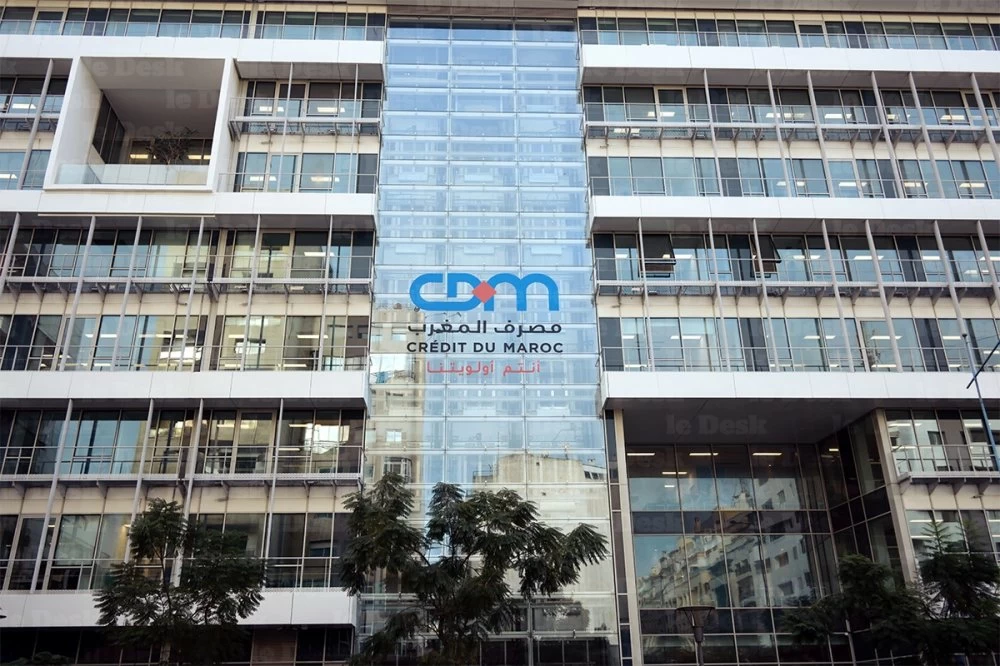
In a strategic context, a merger between BMCI and CDM would present strong industrial coherence, as both banks appear complementary across several key segments, despite having notably different profitability and risk profiles.
In certain respects, BMCI and CDM operate within relatively similar scales. For instance, BMCI reported a net banking product of 3.8 billion dirhams in 2024, compared to 3.3 billion for CDM. However, their cost structures reveal a major divergence. BMCI's operating ratio stands at 58%, while CDM has improved its operational efficiency significantly, achieving an operating ratio of 48% since becoming part of Holmarcom. This translates to nearly 600 million dirhams in additional operating expenses for BMCI at a comparable net banking product level.
This difference is directly reflected in their final profitability: CDM generates a net profit of 740 million dirhams, more than double that of BMCI. Both banks, however, have similar balance sheet sizes, with BMCI's equity at 7.3 billion dirhams and CDM's at 7.9 billion dirhams.
Asset quality is another key differentiator. BMCI has a non-performing loan ratio of 11.7%, compared to 7% for CDM, which has a more qualitative portfolio, although both banks maintain a similar coverage ratio of around 70% (Provision B3/Encours B3). The impact on profitability remains significant, with CDM's cost of risk at 0.7%, versus 1.2% for BMCI.
In terms of valuation, the two institutions are trading at distinct multiples for 2026. Market consensus values CDM at 11.7 times its earnings over the next two years, while BMCI is valued at just over 14 times. Recent research notes indicate that CDM is also better valued against other benchmark multiples.
In the event of a merger, the potential for value creation appears more significant for BMCI, with a gradual normalization of the operating ratio towards 50%, down from the current 58%. This shift would mechanically lead to a substantial improvement in profits. CDM would benefit from qualitative rather than quantitative synergies, particularly through the integration of certain BMCI expertise, especially in private banking and market activities, including foreign exchange.
The merger would also allow for optimization of offerings, pooling of platforms, and enhanced client coverage in certain high-value segments.
Of course, discussions between Holmarcom and BNP Paribas are still in their early stages. However, a strengthened control of BMCI by Holmarcom, followed by a merger with CDM, would align with a rational consolidation strategy for the Moroccan banking sector and could potentially create value for shareholders. The realization of such a scenario will depend on numerous regulatory, operational, and financial parameters. Nevertheless, Holmarcom's ability to act swiftly and effectively, as demonstrated by the acquisition of CDM, suggests significant potential for the ongoing operation and, ultimately, a profound transformation of BMCI, regardless of the scenario chosen.


