Artificial Intelligence and Market Integrity: Navigating Responsibility Amidst Algorithms
The Role of Artificial Intelligence in Financial Markets
Artificial intelligence is at the forefront of significant changes within financial markets. The focus is not on regulatory disruption or systemic threats, but rather on how these technologies fit into existing frameworks and how to maintain market stability and integrity in this evolving landscape.
In trading rooms, asset management firms, and research departments, AI is gradually establishing its role primarily as a tool for data analysis and exploration. While its adoption in the Moroccan ecosystem remains selective, international practices provide clear insights into potential applications, including large-scale processing of financial information, anomaly detection, and identifying complex correlations among economic or sectoral variables.
This acceleration in analytical capabilities does not inherently pose a regulatory risk; instead, it can enhance informational efficiency and refine decision-making processes.
Challenges of AI in Content Generation
Concerns arise when AI moves beyond analysis to content production or reformulation. For instance, an automatically generated summary may present unverified rumors as credible information. An internal note might excessively extrapolate from ambiguous statements, while an algorithmic summary could misrepresent hypotheses as established trends.
In these scenarios, the core issue is not the intent—absent in automated systems—but the responsibility of the human actor who validates, disseminates, or relays the information. AI-generated analysis is never legally autonomous; it remains content published under the responsibility of its issuer.
The Impact of Algorithmic Precision on Market Interpretation
AI also introduces a more subtle factor: the speed at which automated analyses are disseminated and replicated. In environments utilizing these tools, a misinterpretation can quickly be integrated into various analytical reports, dashboards, or decision-support systems.
This phenomenon of algorithmic amplification can transform a simple inaccuracy into a collective bias in market interpretation, occurring without any fraudulent intent. Thus, the risk lies not only in the initial error but also in its rapid and often silent propagation through systems.
This dynamic underscores the necessity for effective analytical and editorial oversight, particularly when content is produced or assisted by AI. The focus shifts from merely ensuring information quality to mastering its validation and dissemination processes.
AI's Role in Investment Decision-Making
Currently, the use of AI in investment decision-making within the Moroccan market is limited and primarily exploratory. However, developments in other financial markets provide valuable insights for anticipating future challenges.
In markets where these technologies are more widely integrated, certain models can automatically adjust asset allocations, exposure levels, or execution strategies based on predefined parameters. While AI does not directly disseminate information to the market, it influences decision-making.
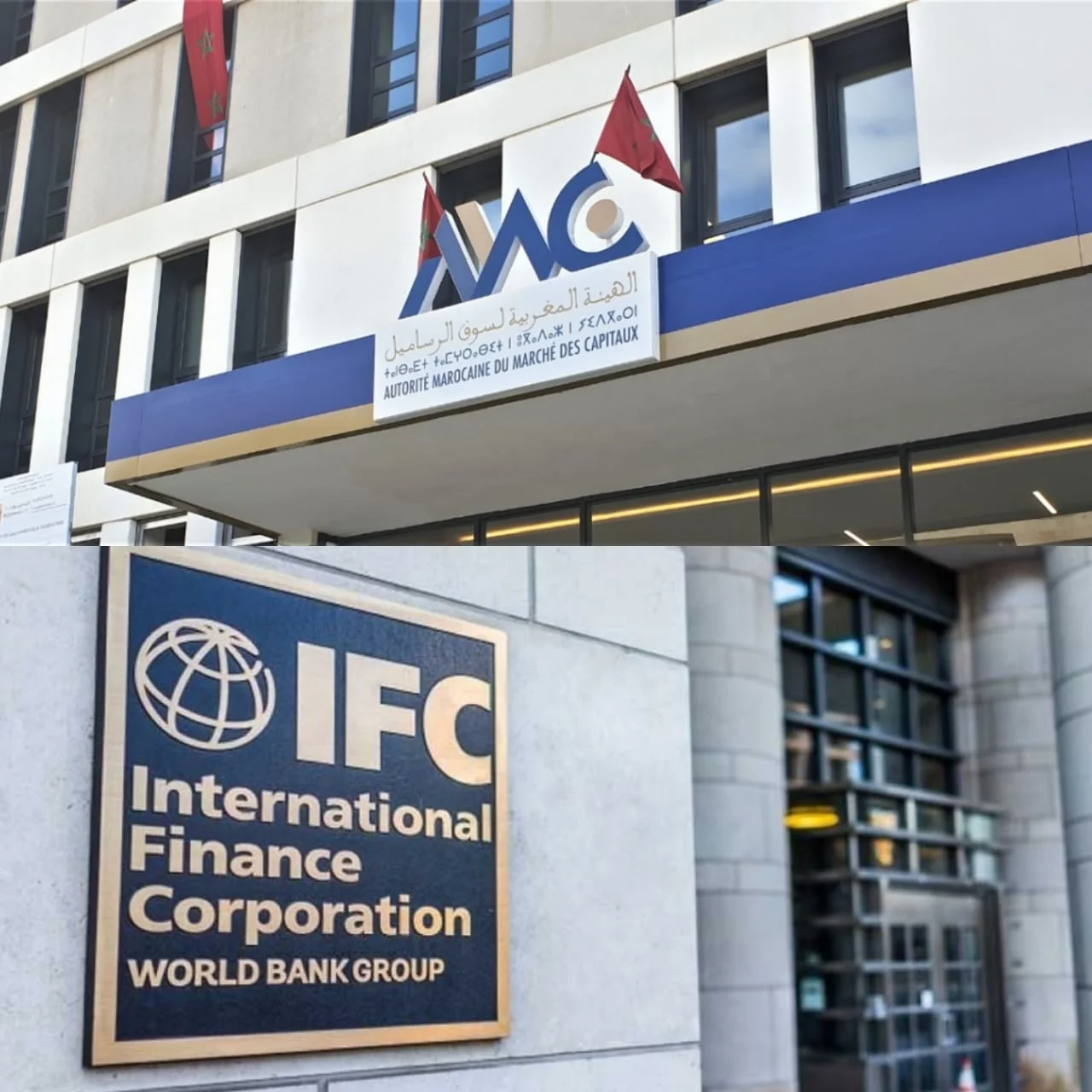
Regulatory concerns then shift towards the potential effects on price formation. The AMMC guidelines remind stakeholders that certain practices are prohibited, including actions aimed at artificially influencing prices or creating misleading appearances of supply or demand.
As these tools become more prevalent, a poorly calibrated algorithm could lead to unexpected behaviors. For example, a model that reacts mechanically to transient signals might exacerbate volatility, while an execution system could fragment orders, creating an artificial impression of market activity.
In such scenarios, the absence of fraudulent intent does not necessarily negate legal scrutiny. The evaluation also considers the objective effects produced in the market.
The Need for Enhanced Governance
Automation does not alter the nature of existing regulations; rather, it heightens the demand for traceability, documentation of parameters, and control over behavioral risks associated with models. The critical turning point lies not in automation itself—already well-established in market practices—but in the degree of autonomy of these systems.
Algorithms executing strictly predefined rules represent a continuation of known technological practices. In contrast, self-learning and adaptive models introduce new challenges. Although these architectures remain marginal in the Moroccan financial ecosystem, their international development raises questions regarding governance, interpretability, and control.
These systems can dynamically adjust their behaviors, sometimes in ways that are difficult for operators to interpret. This evolution necessitates strengthened governance, based on explicit risk limits, anomaly response mechanisms, and periodic audits.
The Moroccan Market Context
The Moroccan market presents a unique configuration in this regard. The integration of artificial intelligence into investment processes remains cautious and gradual. This timeline offers an opportunity for structuring rather than indicating a delay.
It allows for the early incorporation of governance requirements for models: independent validation, bias control, documentation of assumptions and parameters, and human supervision mechanisms. Instead of retroactively correcting deviations, the ecosystem can establish a suitable framework before a broader adoption of these technologies.
Regardless, the regulator's guidelines emphasize that the strength of a market relies on transparency, fairness, and the responsibility of participants. In the age of algorithms, where adoption remains gradual across various segments of the Moroccan market, this requirement does not diminish; it becomes more precise and expands to encompass the mastery of technological instruments that now facilitate information flow and indirectly influence price formation.
The challenge in the coming years will not be to oppose innovation and regulation but to establish a genuine culture of technological governance, where human oversight, model control, and clearly assumed responsibility become essential components of market trust.