Allianz Trade Releases Comprehensive Country Risk Atlas
Allianz Trade has unveiled its third edition of the Country Risk Atlas, a pivotal study assessing economic prospects, risks, and opportunities across 83 countries, which collectively account for approximately 94% of global GDP. This report utilizes an exclusive risk assessment model that is updated quarterly, reflecting the latest economic developments and proprietary data.
"Our ratings provide a thorough analysis and insight into the economic, political, business environment, and sustainability factors that influence non-payment risk trends at a macroeconomic level. Each rating incorporates 17 short-term indicators and 18 medium-term indicators, serving as a pragmatic compass for decision-makers navigating a world fraught with multiple crises, helping them manage volatility, protect cash flows, and turn risk awareness into competitive advantage," stated a senior economist at Allianz Trade.
Morocco: A Growing Economy Facing Structural Challenges
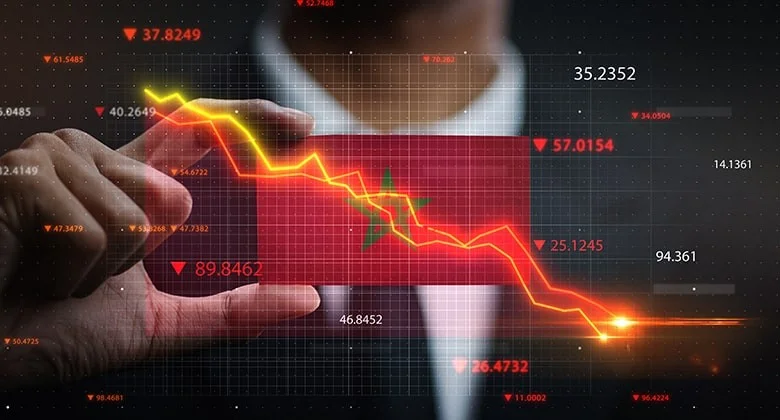
Morocco's economy is demonstrating robust growth, bolstered by its role as a manufacturing hub for Europe and aspirations to become an energy center. Allianz Trade has reaffirmed Morocco's rating at 'B1', establishing it as the safest country for business in Africa.
However, challenges persist, particularly in the retail, real estate, and construction sectors, where payment delays are contributing to bankruptcies. Youth unemployment and the prevalence of the informal sector remain significant concerns, exacerbated by the urban-rural divide.
"Morocco is on track for strong economic growth, with GDP projected to rise by 3.7% in 2026 and 3.5% in 2027, driven by industrial production, foreign investment, and a recovery in the agricultural sector. The tourism sector is thriving, especially with events like the Africa Cup of Nations and the FIFA World Cup. Despite low inflation, the country faces several challenges, including high youth unemployment and a substantial informal workforce. Public spending is increasing, supported by rising revenues and debt issuance, with the debt-to-GDP ratio expected to decrease to 65% by 2027. The central bank is maintaining stable interest rates and plans to fully liberalize the dirham. Phosphate exports have rebounded, and the automotive industry remains vibrant. Nonetheless, political risks linger, with social mobilizations leading to increased social spending. Morocco's development plan emphasizes diversification, investment, and renewable energy, backed by strong international relations, particularly with the United States," explained an economist specializing in Africa and the Middle East.
Global Country Risk Improves Despite Challenges
Contrary to expectations, global country risk improved in 2025, despite a year characterized by intense trade tensions and various risks, including political, geopolitical, and budgetary challenges. Allianz Trade reported that 36 countries saw their ratings upgraded, while only 14 experienced downgrades.
This trend underscores the emergence of budgetary, monetary, and trade adaptation mechanisms during periods of significant uncertainty. Among the 36 economies with improved ratings are Argentina, Ecuador, Hungary, Italy, Spain, Turkey, and Vietnam.
"In 2025, the upward revisions were primarily driven by stronger macroeconomic fundamentals, supported by more accommodative fiscal and monetary policies. In several emerging markets, improved financing conditions, appreciation of local currencies, and rising commodity prices have lifted restrictions on transfers and convertibility, which are crucial aspects of political risk. In high-income economies, enhanced political stability, disinflation, and strong trade performance have bolstered resilience in Europe, particularly in Germany, Greece, Italy, and Spain, as well as in the Asia-Pacific region, notably in South Korea and Vietnam," remarked the director of economic research.
Persistent Medium-Term Risks for Businesses
While the number of downgrades may seem low, it is important to note that it has nearly tripled compared to 2024, rising from 5 to 14. Additionally, key economies such as France, Belgium, and the United States are included in this list, highlighting ongoing medium-term challenges for businesses.
"Resilience is expanding, but clusters of risk persist in significant economies. For instance, last year, we observed a deterioration in the medium-term macroeconomic environment in 7 markets, compared to 18 that improved. However, these deteriorations involve Belgium, Brazil, France, and the United States, which together account for about one-third of global GDP, ten times more than the economies that experienced improvements. The global economy is navigating one of its most turbulent periods in decades, marked by a convergence of shocks and structural changes such as AI, demographics, climate change, trade, and regulation. Uncertainty remains high, and businesses must adopt a selective approach, evaluating each country individually to grow while safeguarding their assets. This underscores the need for granular and forward-looking risk management that goes beyond general ratings. Continuous monitoring of transfer and convertibility conditions, budgetary trajectories, and trade exposures will be essential to anticipate tipping points," concluded the CEO.